
Brain & Spinal Cord Donation Program
Please note that enrollment in the Emory Healthy Brain Study Brain and Spinal Cord Donation Program is for participating members of the Emory Healthy Brain Study only.
The Emory Healthy Brain Study is dedicated to advancing research on Alzheimer’s Disease and other neurodegenerative diseases. For most people, the time immediately following the death of a family member is very difficult. Discussing the decision to donate your brain and spinal cord with your family and making the necessary arrangements is best done well in advance of disease progression or death.
Why is it important to examine the brain and spinal cord of individuals who do not have memory loss or Alzheimer’s disease?
Healthy brains are equally, if not more important, to study. The brains and spinal cords of individuals with mild cognitive impairment (MCI) and Alzheimer’s disease can provide a wealth of information about abnormal brain changes and how they are different from normal aging. However, the brains of individuals without neurodegenerative disease also offer a wealth of information about aging and neurodegenerative disease diagnosis. Unfortunately, most people don’t recognize the importance of brain and spinal cord donation. Without healthy brains for comparison, scientists cannot determine precisely which brain and spinal cord changes are related to disease and which are related to aging.
When is the best time to make appropriate arrangements and communicate your intention to donate your brain and spinal cord for research?
It is important to make the necessary arrangements well in advance of death. Thus, it is important to communicate your intention to donate your brain and spinal cord to your family. Your physician and chosen funeral home director also need to be informed of your decision to participate in brain and spinal cord donation.
Who can legally authorize a tissue donation or autopsy at the time of death?
Per Georgia state law, autopsy or tissue donation can only be authorized by next of kin at the time of death. This is done by calling the Emory 24-hour autopsy phone number 404-900-9479 at the time of death. In Georgia, except in coroner’s cases, only the person assuming custody of the body for burial, such as the spouse, parent, child, guardian, next of kin, or friend of the deceased person, may consent to the autopsy or tissue donation. If two or more persons assume custody of the body, the consent of one person is sufficient legal authorization for the performance of an autopsy or tissue donation.
Where is the brain and spinal cord donation performed?
Individuals enrolled in the Emory Healthy Brain Study will be brought to Emory University Hospital where our autopsy team will remove the brain and spinal cord. If you live outside the Metro Atlanta area and the body cannot be transported to Emory, our team will work with the family to identify a local pathologist who is willing to do the brain and spinal cord removal and send the tissue to us for examination. The Emory Healthy Brain Study autopsy coordinator can help you locate a pathologist in your area.
What are researchers looking for when examining the brain and spinal cord?
A neuropathological examination of healthy brains and brains showing neurodegenerative changes provides researchers with a host of neuropathology data, such as abnormal proteins, that are part of clinical and research diagnosis. Donated tissues are also shared with other researchers and used for discovery research.
What will the brain and spinal cord donation cost my family?
For those individuals enrolled in the Emory Healthy Brain Study research program, there will be no charge for the brain and spinal cord neuropathological examination. The Emory Healthy Brain Study will arrange for the transport of your body to Emory for tissue donation at the time of death. Your designated funeral home must pick up your body at Emory Hospital after the removal of the brain and spinal cord.
What effect will a brain and spinal cord donation have on funeral arrangements?
The removal of the brain and spinal cord, under the supervision of a pathologist, does not leave any apparent marks and should not affect any of the funeral arrangements, including having an open casket.
How will my family know the results of the neuropathological examination?
Approximately six months after death, the results of the neuropathological tissue examination will be available. Emory Healthy Brain Study physicians will contact your family by phone to provide results. The report will then be mailed to the family members listed on the “Authorization to Release Autopsy Information” section of the Brain & Spinal Cord Donation Program Cognitive Autopsy Inclination Questionnaire.
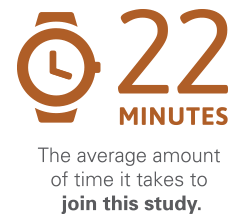
Your time commitment is minimal, but the potential impact is immeasurable!
Free Online Resources: Maximize your body and mind’s potential with these articles on healthy living and healthy food!
Recent news, articles, and information about public health, disorders like Alzheimer’s disease, and the Healthy Aging Study:
[Read the Blog]
[Watch the Video]
Support the Emory Healthy Aging Study
You are now being redirected to the website of our parent organization, Emory University. To support the Emory Healthy Aging Study by making a charitable donation, please submit using the form below: